
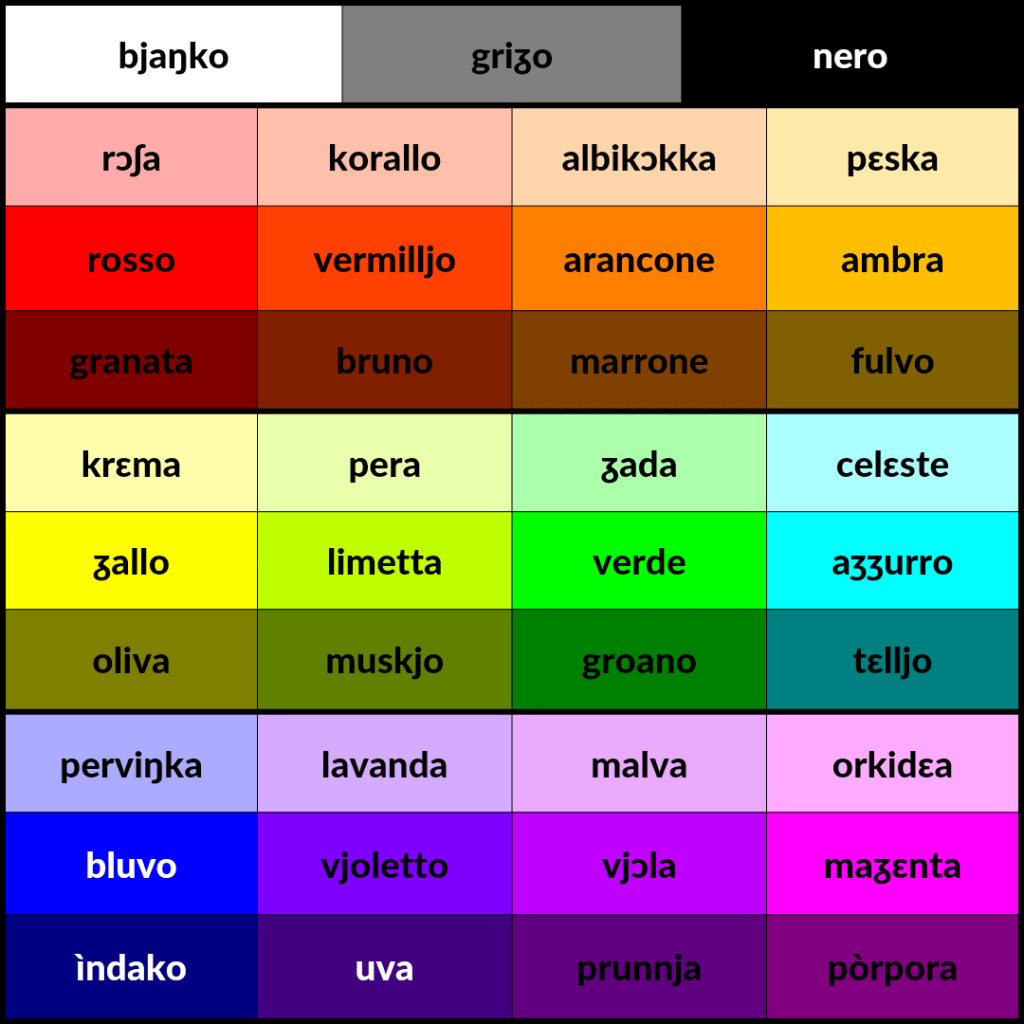
Every culture has its own colour terminology. The Bassa language has basically two words to classify colours: one word for white, red, orange and yellow and one word for black, green, blue and violet. The Italian language instead has twelve words: blue is divided into blu (the typical blue) and azzurro (a hue of blue close to green).
Our culture has 39 colours.
The peculiarity of our colour terms is that they are not descriptive (“the colour x is the colour of the x flower”) and derived from historical conventions, but they are abstract (“the colour x is the light version of the y colour”) and rationally defined following these steps, inspired by foreign languages.
The stage numbers refer to the theory developed by the anthpologist Brent Berlin and the linguist Paul Kay in Basic Color Terms: Their Universality and Evolution.
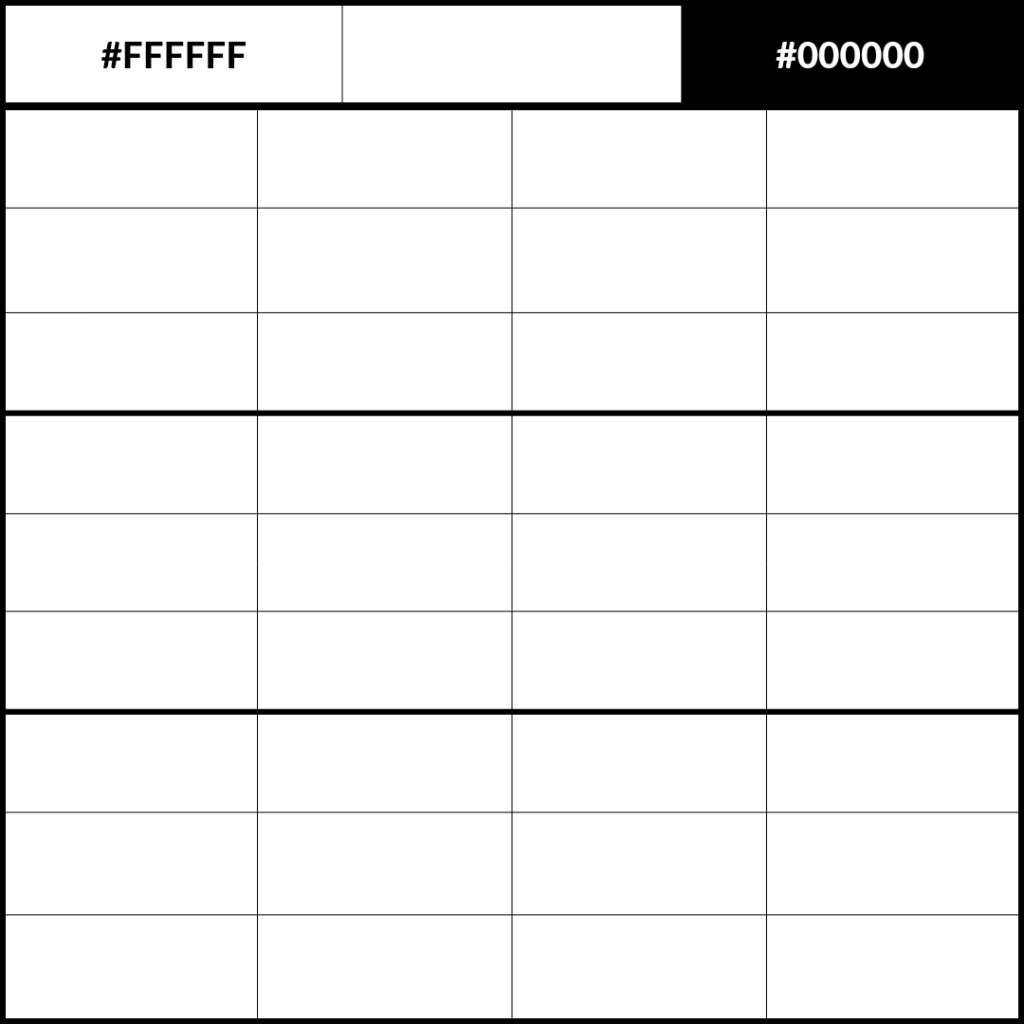
1. Stage I: Black and White
Every language has two different words for black and white. There are various blacks and whites, but we refer to them in their purest form.
Now we have 2 colours.
2. Stages II–V: Red, yellow, green and blue
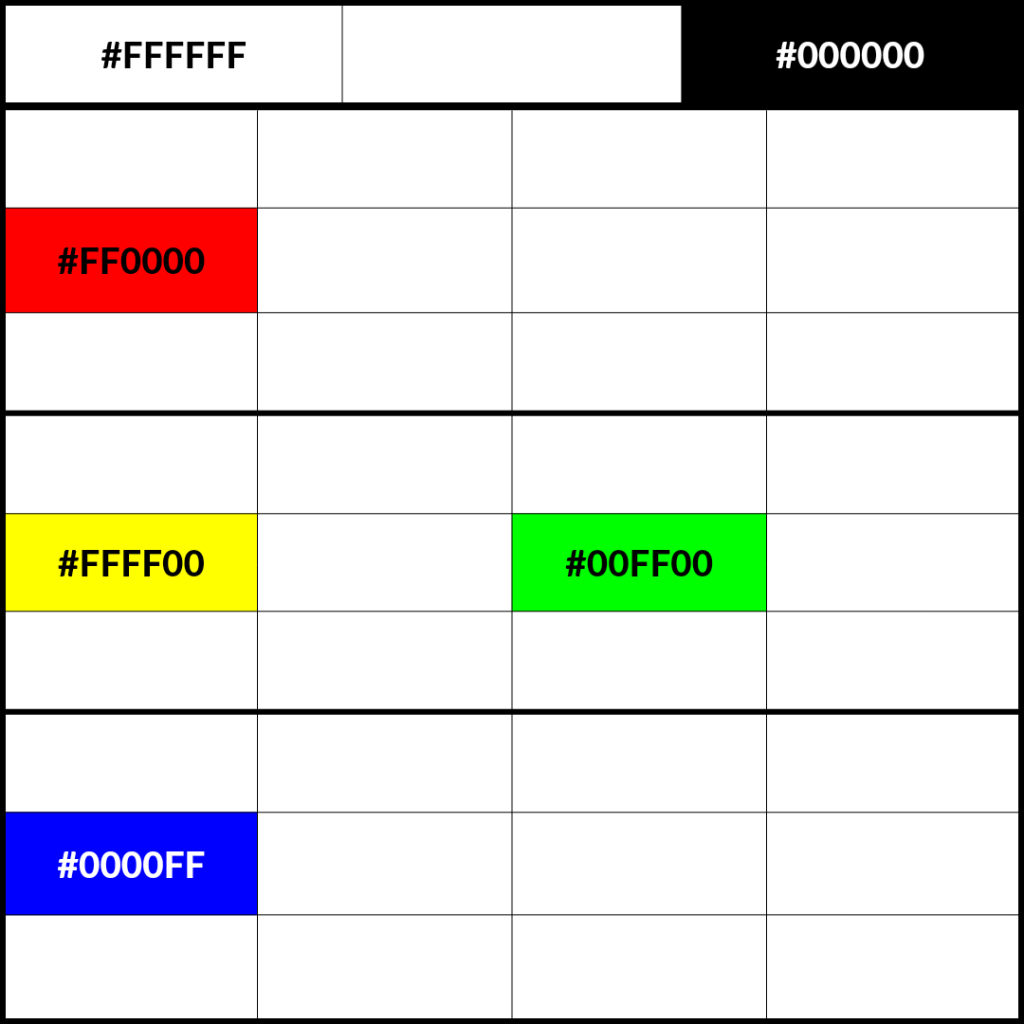
When languages have more colours – which is desirable for us – they usually add red, yellow, green and blue. There are many hues of them, but we will refer to them in their most saturated form.
Now we have 6 colours.
3. Stage VI: Brown
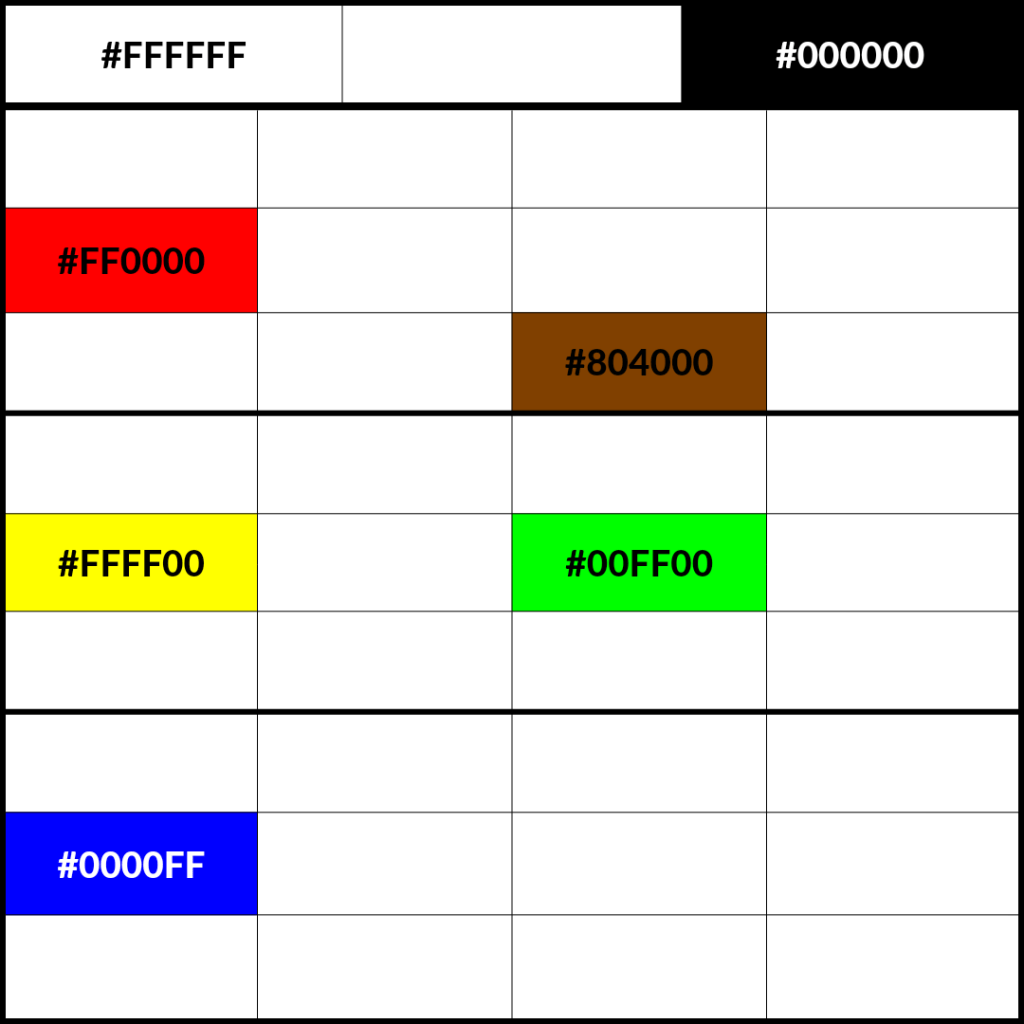
The next colour languages typically add is brown: we add it.
Now we have 7 colours.
4. The First Principle: Dark colours
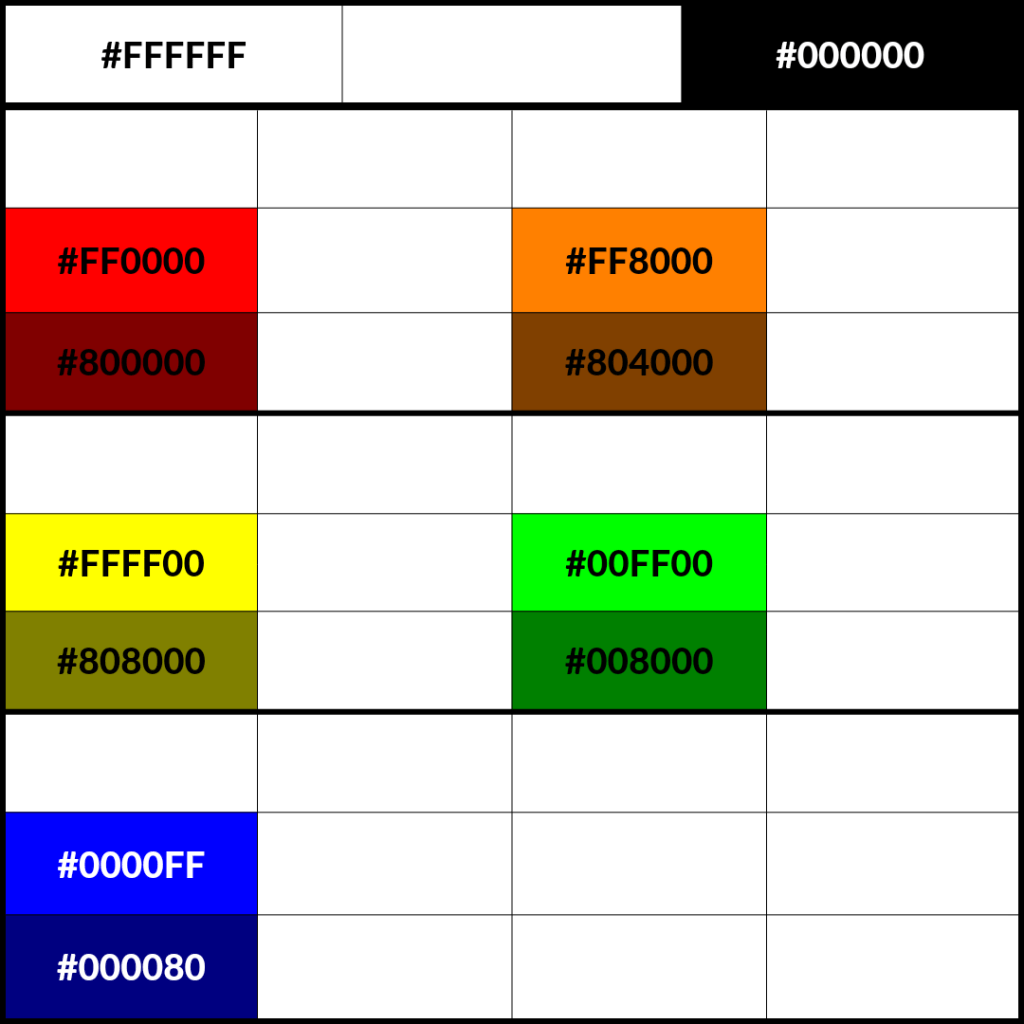
Brown is different from the previous colours: it is not a saturated colour, but dark orange. We generalize this principle (we want a balanced system) and we add orange and the dark form of all the colours.
Now we have 12 colours.
5. Stage VII: Gray, Purple and Pink
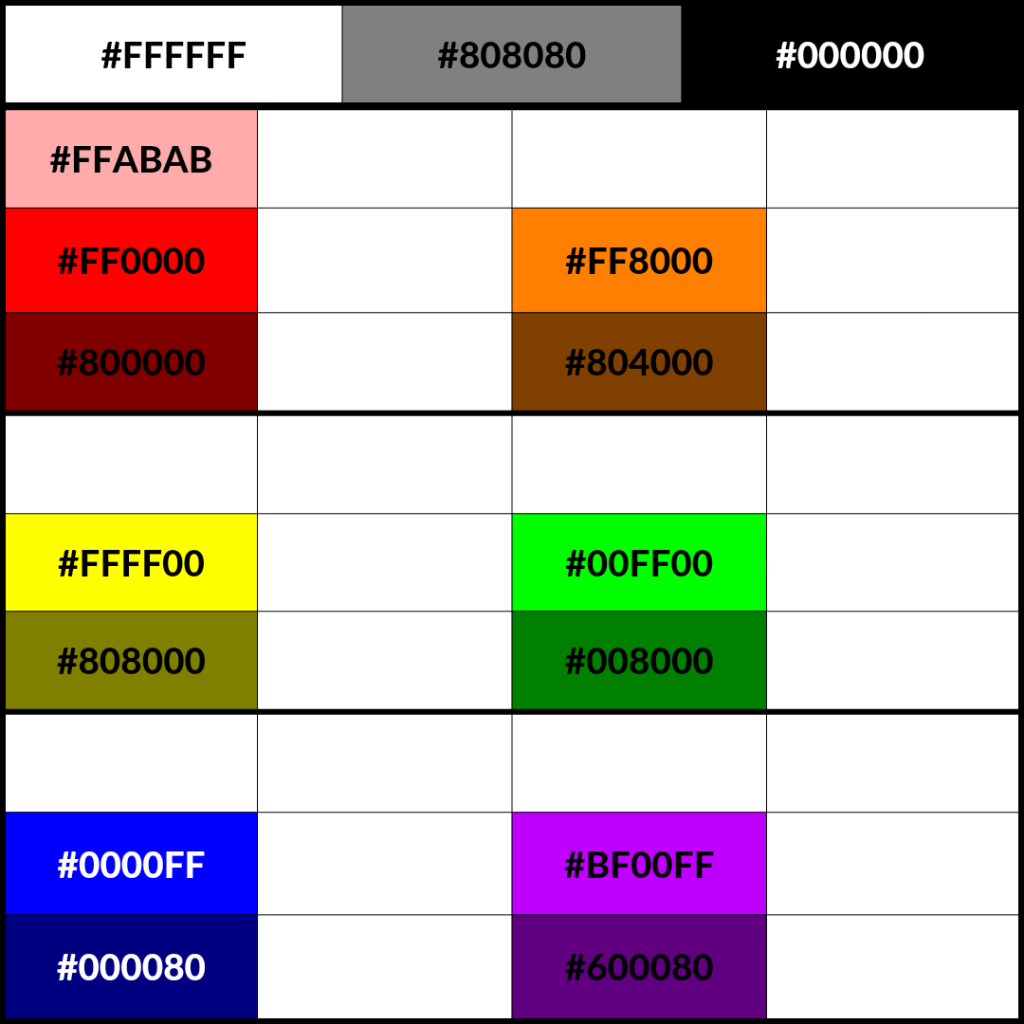
After brown languages typically add gray, purple and pink (and orange). Since they are meaningful, we add all of them, with dark purple in accordance with the previous principle.
Now we have 16 colours.
6. The Second Principle: Light Colours
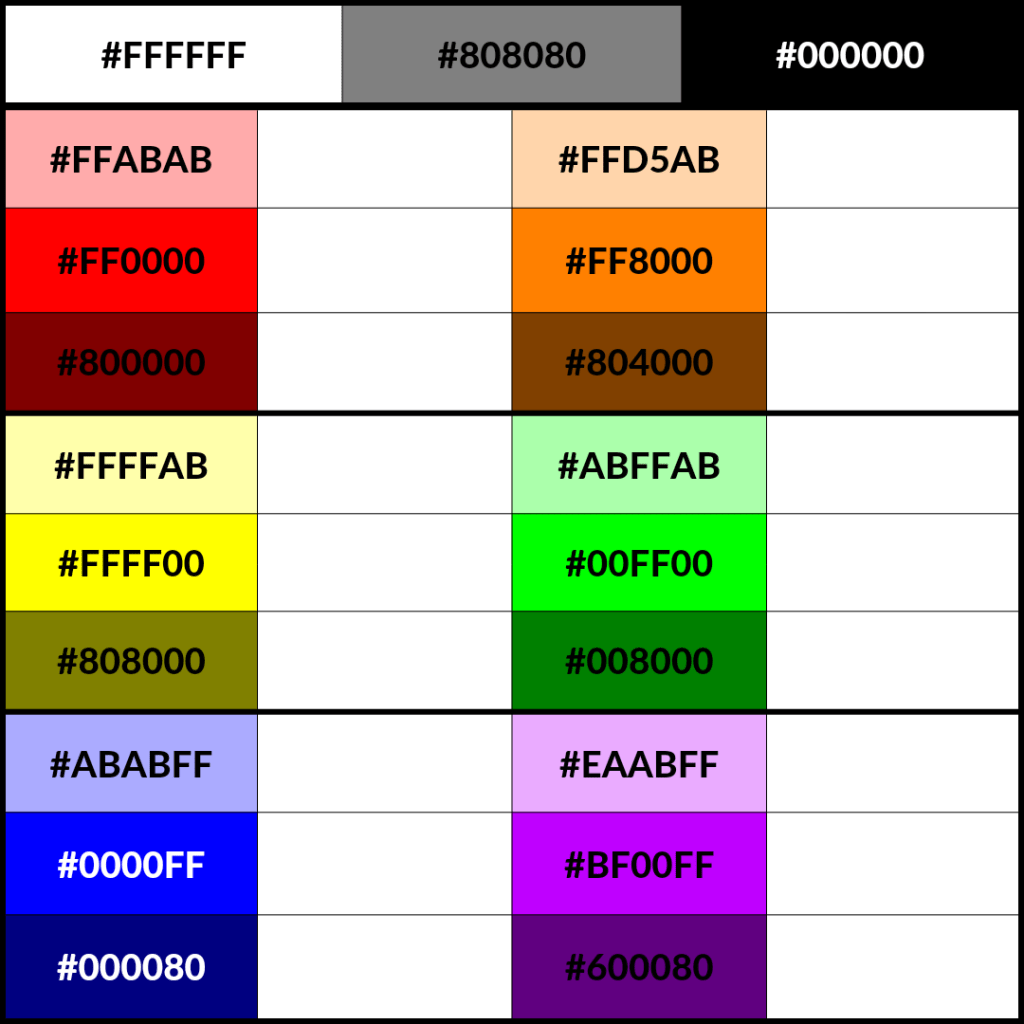
Pink has introduced a new principle, that we have to follow in order to preserve the harmony of the system: it is light red. Hence we add the light form of all the colours.
Now we have 21 colours.
7. Stage VII+: Azzurro
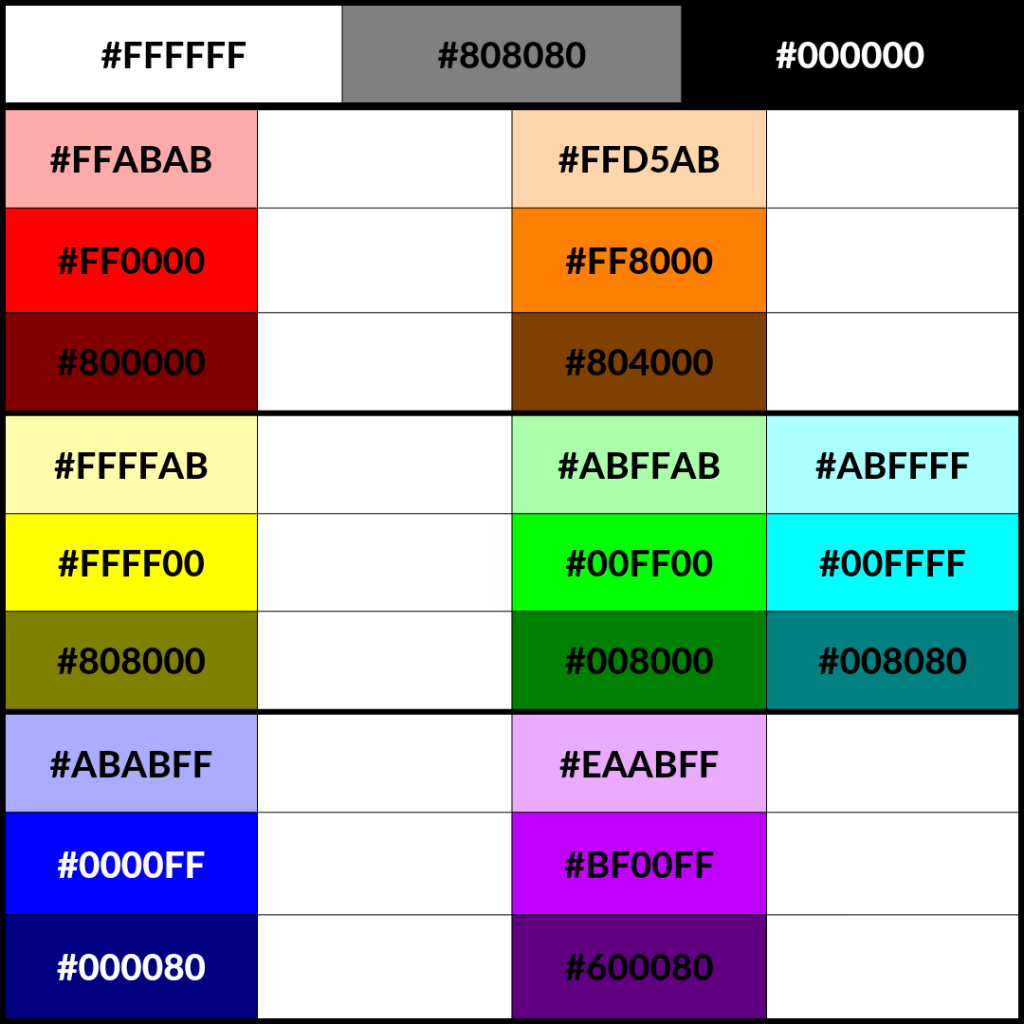
Some languages, like Italian and Russian, have another colour, that makes a lot of sense: azzurro in Italian and голубой in Russian*. We add it, with its dark and light forms following the previous principles.
Now we have 24 colours.
* This colour is usually mistakenly translated as light blue, but it is not a light blue at all, like orange is not a light red: it is a different saturated hue.
8. The Third Principle: Intermediate Colours
This last colour, a hue between green and blue, has introduced the third and last principle of our system: adding intermediate hues between the previous colours.
Now we have 39 colours and our system is complete. By the way, 39 is perfect, because it gives us the opportunity to assign a colour to each of the 39 disciplines.
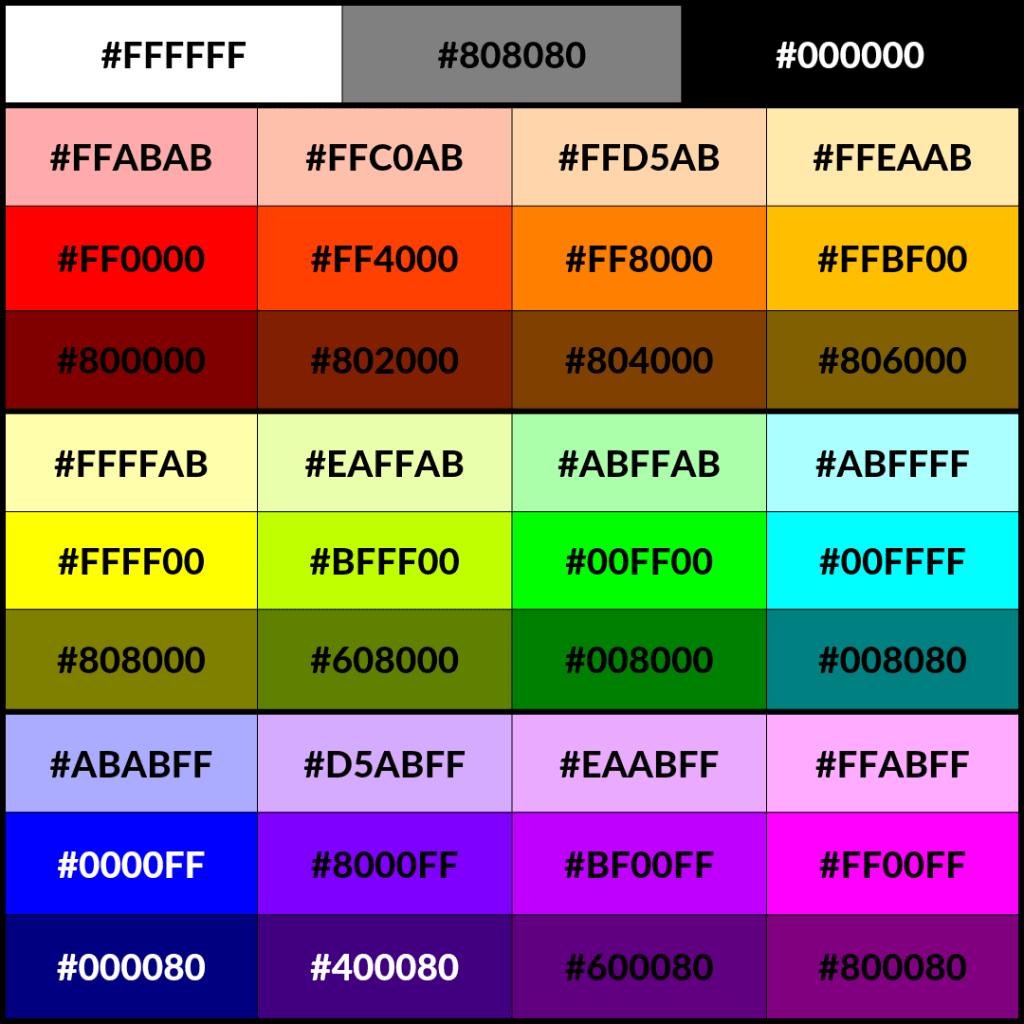
9. The Last Step: Naming the Colours
Now we only have to give names to these colours. By now we will follow the Italian language (the primitive form of our language) bending its terminology to our system.
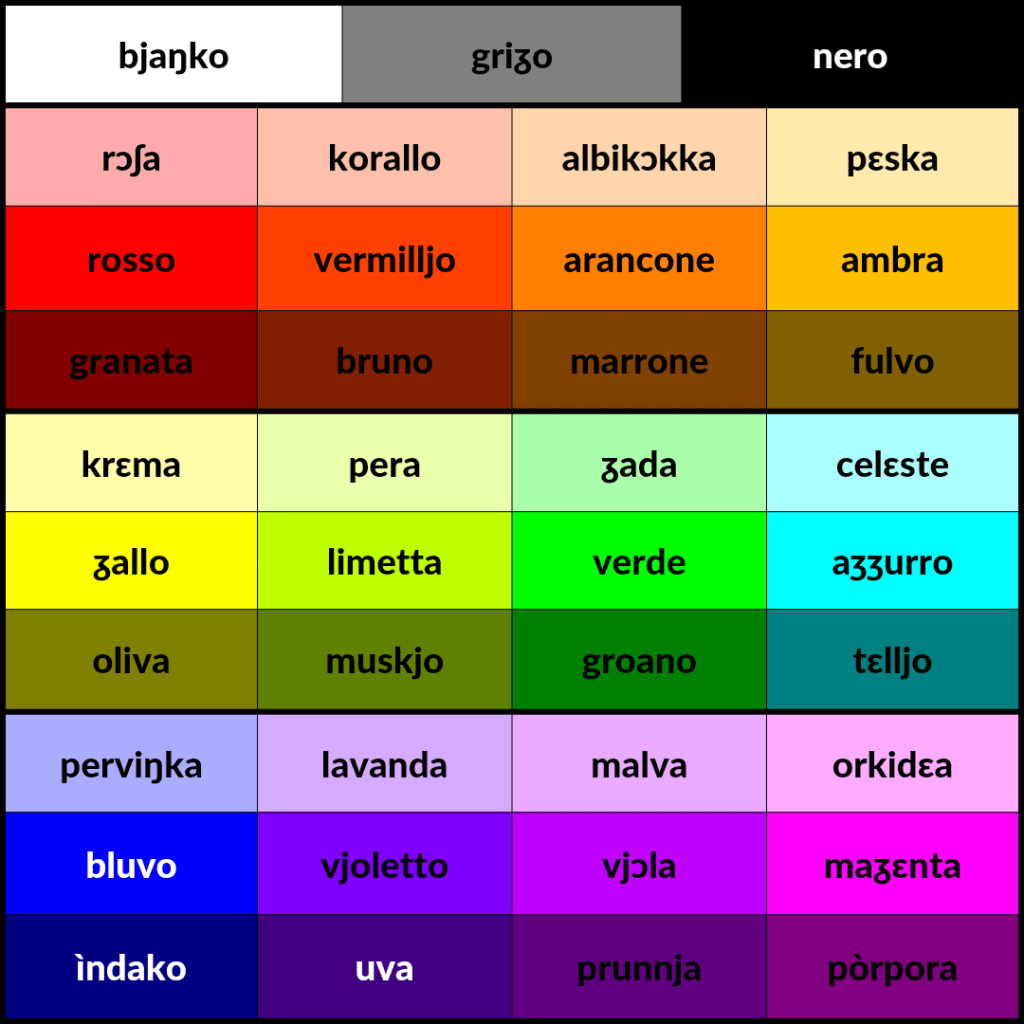
This system suits us because it is symmetrical, efficient, clean and universal, like a compass – in contrast to foreign systems, that are messed up and biased towards particular hues, like those gravitating around red in certain ones and blue in other ones.
On the other hand we lack basic words for grayish colours like beige and quaternary colours like scarlet. But it is not a real problem, since we can easily call them – if we have to – griᵹopɛska (“peach-gray”) and rossovermilljo (“red-vermillion”).
We like our colour terms, because they allow us to see things as they are, while foreigners by default can’t distinguish between oliva and muskjo, lavanda and malva, bruno and marrone and other differences as obvious as that between blue and violet.
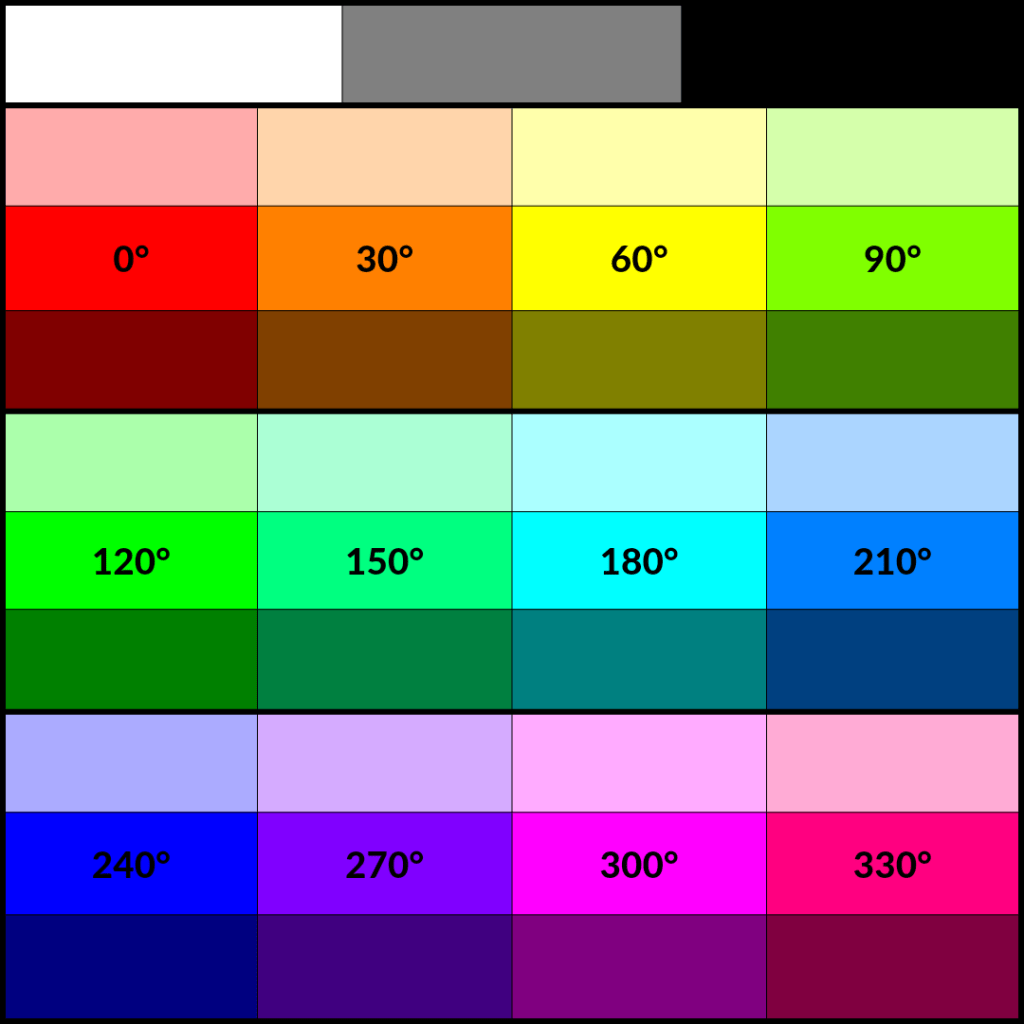
Our aim was not to make an abstractly accurate system, that would have possibly looked like the brute one below, but a concretely accurate one, based on how we see colours. For example, many greens, objectively very different, look the same to us, while we are very sensitive to the slightest difference in purples – maybe because we have evolved to eat fruits more than grass and leaves.
A perfect system should have equally different colours according to our perception, not to physical values.
This is the direction for future developments.
 Il Vento d'Oriente